
During a Fulbright Specialist Program assignment to Madagascar, Professor Mehdi Mekni helped modernize a technology institution’s curriculum through industry-recognized microcredentials, expanding the global impact of an innovation model pioneered at the University of New Haven.
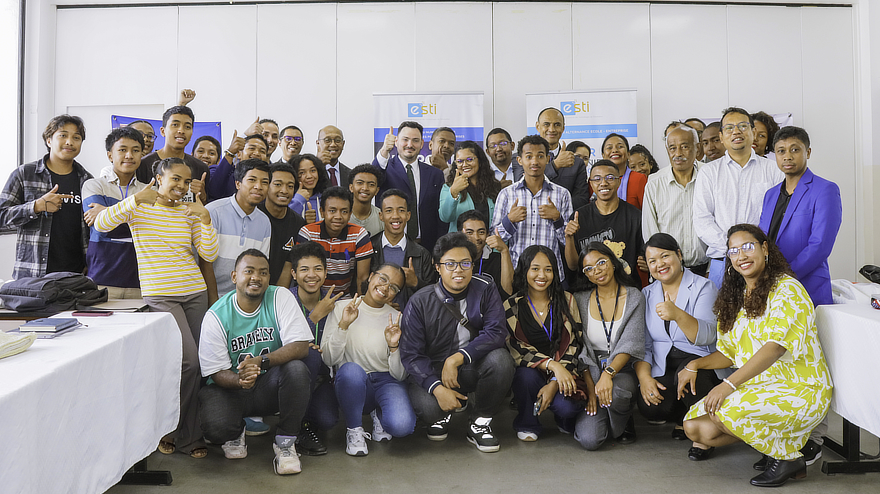
Helping students connect classroom learning to workforce demands is central to the work of That work recently took him across the globe through a Fulbright Specialist project in Madagascar, where he partnered with the École Supérieure des Technologies de l’Information (ESTI) to help modernize its curriculum and expand opportunities for students.
Selected through the Fulbright Specialist Program, Mekni introduced to ESTI a model he pioneered at the University of New Haven through the .
“I was selected from a pool of highly qualified professors and assigned to work with ESTI in Madagascar,” said Dr. Mekni. “The focus of my visit was to help modernize their curriculum and integrate industry-recognized microcredentials.”
Building on his work at the University of New Haven, where he introduced a Unity certification into the concentration in Game Design and Development, he guided ESTI in designing pathways for certifications from Microsoft, AWS, Cisco, CompTIA, and others.
The project also marked Dr. Mekni’s second Fulbright Specialist experience, following a 2024 project at the in Malawi.
'A direct extension of the B.S. Game Design Development Concentration model'
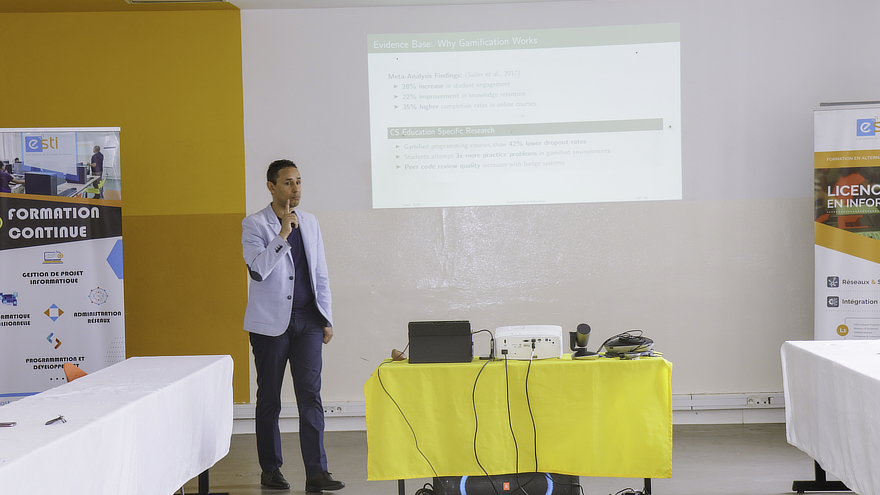
At the University of New Haven, Dr. Mekni pioneered the integration of industry certifications into degree programs, giving students both academic credit and globally recognized credentials.
He described the work at ESTI as “a direct extension of the B.S. Game Design Development Concentration model,” helping another institution adopt microcredentialing to strengthen student employability while aligning education with workforce needs. Both efforts, he said, reflect a larger commitment to bridging higher education with industry needs and standards.
Dr. Mekni’s experience and leadership in credential integration, supported through Connecticut’s Tech Talent Accelerator 1.0 and 2.0, were key factors in his invitation to support ESTI’s transformation into becoming a certification hub.
“My leadership in embedding microcredentials at New Haven made me a strong candidate to oversee ESTI’s transformation,” he said.
'Industry-recognized credentials can transform confidence'
Dr. Mekni said the most impactful moment was watching ESTI faculty and students embrace microcredentialing.
Their enthusiasm, he said, reminded him of what he witnessed at the University when students earned Unity certifications for the first time.
“Their excitement mirrored what I saw at the University of New Haven,” he said. “It was proof that industry-recognized credentials can transform confidence, career readiness, and institutional reputation.”
While he encountered challenges, including limited exposure to credential-based teaching models, Dr. Mekni saw opportunity in that reality. “ESTI can leapfrog traditional barriers by adopting microcredentialing early,” he said. “It can position itself as a leader in Madagascar’s digital workforce development.”
He said the involvement of government ministries and industry partners, “confirmed the timeliness and importance of this approach.”
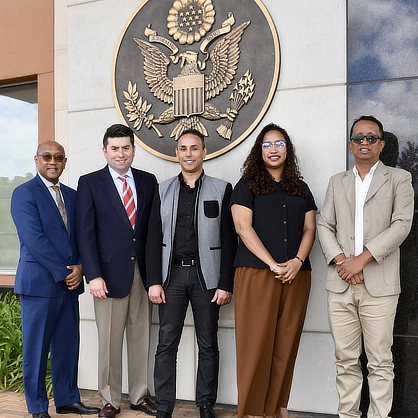
'It opens doors for collaborations'
Dr. Mekni said the Fulbright experience will continue to influence his work at the University of New Haven, particularly in developing innovative opportunities for students.
“This experience strengthens my teaching by providing international case studies of credential-based education,” he said.
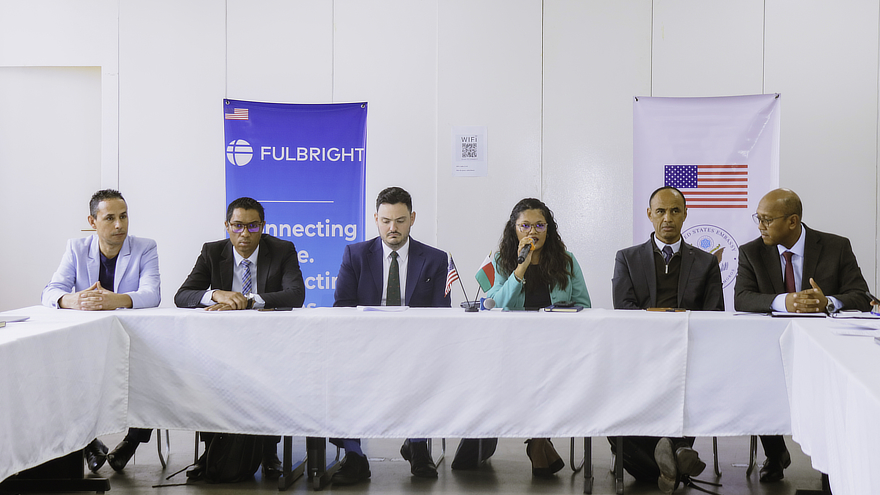
He also sees potential for broader collaboration, including study-abroad opportunities and joint projects focused on certification integration and workforce readiness.
“It opens doors for collaborations and student opportunities,” he said.
Just as importantly, he said, the work reinforces the global relevance of a model developed at the University and the role higher education can play in shaping workforce innovation across borders.
“Most importantly,” said Dr. Mekni, “it expands the global network of institutions committed to blending academic degrees with industry-recognized credentials.”
Contact
Get the highlights!
Stay up to date with our weekly e-newsletter, highlighting stories from around the University and media clips featuring our faculty experts.


