By expanding access to higher education in correctional facilities, the University of New Haven’s Prison Education Program is fostering academic excellence, personal growth, and meaningful second chances for incarcerated students.
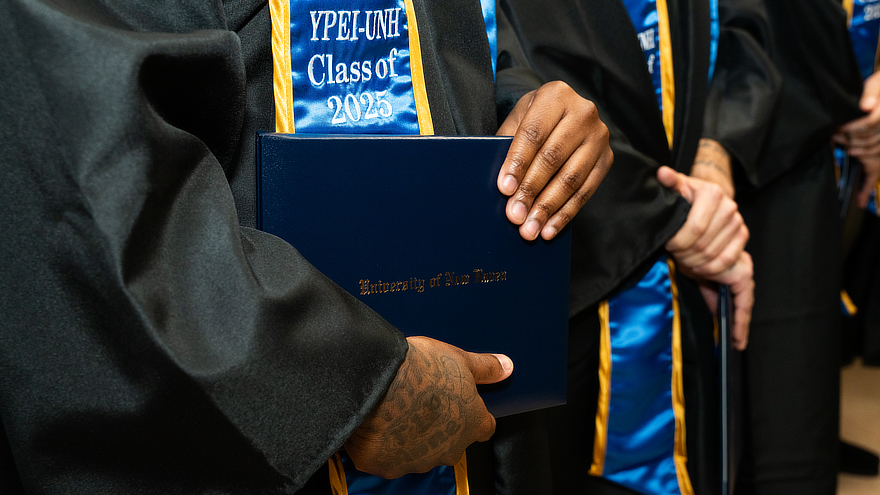
The University of New Haven joined the (YPEI) in 2021, marking a significant step forward in expanding access to higher education for incarcerated individuals.
With the full support of , and the expertise and leadership of Prison Education Director , the University committed to offering Associate of Arts (A.A.) and Bachelor of Arts (B.A.) degrees to students who meet the rigorous criteria for admission and successful completion of these programs. This commitment reflects not only institutional leadership, but a deeply held belief in the transformative power of education.
At the heart of this initiative is a remarkable group of University of New Haven faculty, advisors, and support staff who bring the institution’s mission to life each day. Through the , they provide academic courses and comprehensive student support services at the MacDougall-Walker Correctional Institution, a men’s state prison in Suffield, CT, (Hartford County), and the Federal Correctional Institution (FCI) for Women in Danbury, CT, (Fairfield County).
Faculty members teach courses in a wide array of disciplines across the liberal arts, including English, Math, Sciences, Visual Arts, Legal Studies, History, Communications, and Philosophy, guiding students toward meaningful academic achievement and degree completion. Their dedication extends far beyond the classroom, fostering an environment where students feel seen, challenged, and supported in their educational journeys.

'No one felt left out'
, chair of the English Department, exemplifies the innovation and adaptability required to teach in this unique setting. His course, Narrative Structure in Games, presented a fundamental challenge: students do not have access to the internet.
Rather than seeing this as a limitation, Dr. Dowd embraced it as an opportunity to rethink and redesign his approach. He incorporated analogue games such as board and card games and created typed “cheat sheets” to replace digital tools typically used in coding instruction.
The students rose to meet this challenge with remarkable determination. Using Twine—one of a few approved software programs—they collaborated extensively, applying their learning both during class and in after-hours study sessions.
By the end of the course, students had not only mastered the material but, as Dr. Dowd proudly noted, “knew Twine better than I did.” The final projects ranged from video games to board games to sports-based concepts, reflecting both creativity and technical understanding. Perhaps most importantly, Dr. Dowd emphasized that, “no one felt left out,” describing the classroom as a “very comforting, rewarding environment”—even more so than he had anticipated.
'Teaching is a two-way street'
For , teaching Constitutional Criminal Procedure and Criminal Law presents a different kind of opportunity. Utilizing the Socratic method, she challenges students to engage deeply with complex legal concepts, applying analytical frameworks to hypothetical scenarios. This method, often intimidating even in traditional law school settings, becomes a powerful tool for developing critical thinking and argumentation skills.
What makes this experience particularly meaningful, however, is the reciprocal nature of learning. As a career defense attorney, Prof. Merkin brings extensive professional insight into the classroom.
At the same time, her students’ lived experiences offer her a new and invaluable perspective on the justice system. She describes teaching in this environment as “a two-way street,” noting that adapting her approach to meet her students’ perspectives has made her “a better teacher across the board.” The exchange of knowledge and perspective enriches both educator and student in profound ways.


'The best experiences I’ve had as a historian'
For , his experience teaching history courses at MacDougall has been equally transformative. From the moment he entered the program, he recognized the intellectual rigor and engagement of his students.
Teaching courses such as Russia and the USSR: Multiethnic Empire, Revolution, and Communism, he challenges students to grapple with complex texts and ideas, including works as demanding as War and Peace.
Dr. Woodworth notes that his students are “more intellectually demanding than other students,” requiring him to bring his absolute best to every class session. The result is deeply rewarding.
Reflecting on his experience, he describes his prison classes as “the best teaching experiences I’ve had as a historian.” His commitment continues as he prepares to return from sabbatical with renewed energy, eager to bring fresh insights from his research abroad into the classroom.
'Storytelling as an invaluable tool'
, known as Dr. T., brings a unique blend of experience in radio, television, and stand-up comedy to his communication courses at both MacDougall and FCI Danbury.
His interdisciplinary background allows him to connect with students in dynamic and meaningful ways, emphasizing storytelling as a powerful tool for communication.
In his classroom, students explore structure, sequencing, objectivity, and self-assessment while engaging in deeper reflection about their identities and aspirations.
Dr. T. helps students develop the ability to communicate across different contexts and media, equipping them with skills that extend far beyond the classroom. His approach recognizes the full humanity of his students and their desire to grow, learn, and succeed.
'Collaboration supplants competition'
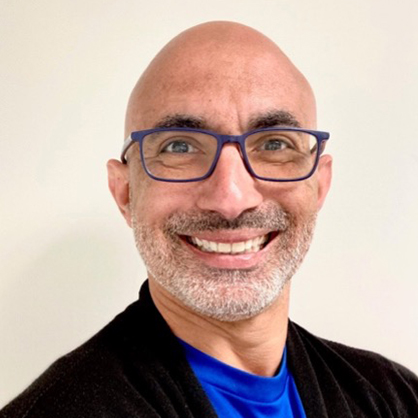
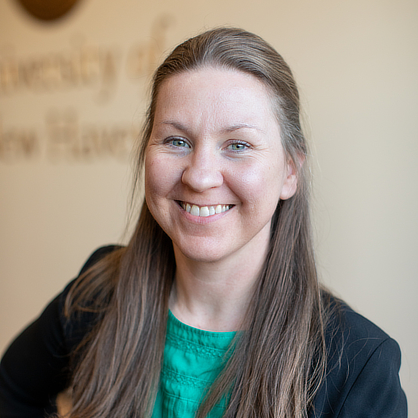
teaches courses in Dramatic Literature and Writing at Danbury, highlighting another defining feature of the PEP: collaboration.
By allowing students to select from a diverse range of plays — from classical works to contemporary pieces — she fosters a sense of ownership and engagement in the learning process. In her writing courses, students collectively annotate texts, contributing to shared resources that benefit future cohorts.
This collaborative environment replaces competition with mutual support, creating deeper pathways to understanding. Students who progress into the Peer Tutor Practicum microcredential apply what they have learned to support others, demonstrating both mastery of content and a growing capacity for leadership.
Dr. Isbell observes that many of her students show the potential to become educators themselves, noting that their growth provides powerful evidence that “generational trauma can be overcome” with the right tools and support.
'The importance of existential humility'
Through his philosophy courses, , invites students into profound intellectual and personal exploration. Teaching subjects such as Ethics and Philosophy of Religion, he encourages students to engage with complex ideas while maintaining “intellectual and, especially, existential humility.”
His classroom becomes what he describes as “a very special, almost sacred space,” where students approach their studies with seriousness and depth.
The impact of this work is evident not only in academic achievement but in personal transformation. Students produce graduate-level writing—often by hand—and engage in thoughtful discussions that reshape their perspectives.
Dr. Ficek has attended student graduations where he was “moved to tears,” witnessing firsthand the life-changing impact of education. These experiences reinforce his belief in the program’s significance and raise his expectations for students across all teaching environments.

'Everyone wins'
The collective efforts of University of New Haven faculty, advisors, and staff create a powerful ecosystem of learning, support, and transformation within the Prison Education Program. Their expertise, commitment, and innovative teaching approaches provide students with the tools they need to succeed—not only academically, but in their future lives beyond incarceration.
Students develop critical thinking, communication, and collaboration skills that empower them to reimagine their futures. Faculty gain new perspectives that enrich their teaching and scholarship. Communities benefit from individuals who are better prepared to contribute meaningfully to society. In every sense, this program embodies the idea that education is a catalyst for change.
The impact of the University of New Haven’s Prison Education Program is profound — and growing. With continued support, we can expand access, enhance programming, and transform even more lives through the power of education.
If you are inspired by these stories and would like to support this important work, .
In a powerful show of support, Peggy DeStefano has committed a matching gift to the Prison Education Program, joined by an additional matching contribution by Michael Rossi, Ph.D., their gifts will help multiply the impact of every donation made during Giving Day.
Your support helps create opportunity, restore dignity, and change lives—one student at a time.
Peggy DeStefano '71, '74, J.D. earned a bachelor’s degree in and a master’s degree in criminal justice from the University of New Haven. She earned a master’s degree at Southern Connecticut State and her J.D. at Hofstra University.
Contact
Get the highlights!
Stay up to date with our weekly e-newsletter, highlighting stories from around the University and media clips featuring our faculty experts.
Recent News
The Â鶹AV Blog

Health Sciences and Marine & Environmental Sciences Programs Launch Interdisciplinary Collaboration
University News

University of New Haven Faculty Earn Three Connecticut DOT Research Awards in a Single Year
The Â鶹AV Blog

University of New Haven Student Reflects on Significance of Breast Cancer Awareness Month
The Â鶹AV Blog
