
From defining the purpose to emailing faculty, here’s a down-to-earth look at diving into a first research project from Beatrice Glaviano ’26.
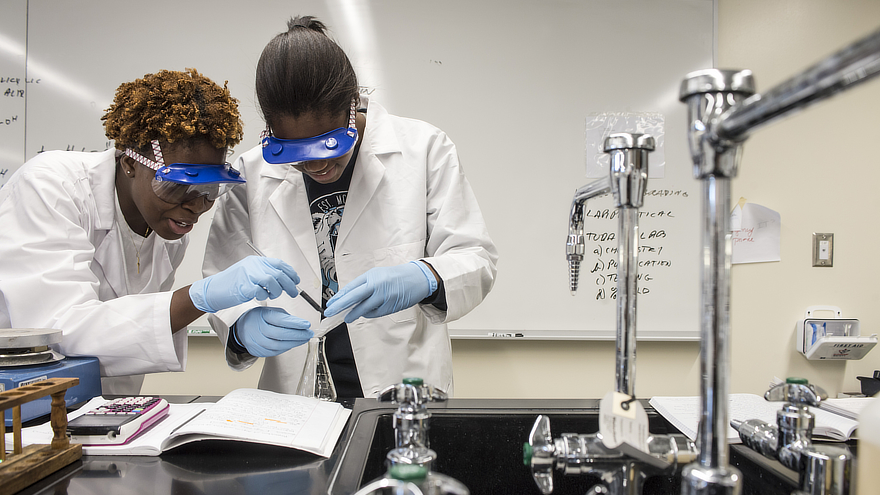
So, you want to do research. Where do you start? Where do you go? Do you offer a sacrificial lamb to the research gods? Is Microsoft Excel about to become your best friend and worst enemy?
It actually might. I have a love-hate relationship with Excel.
If you couldn’t have guessed, this blog is going to be all about getting started with research. This isn’t a guide as to how to do your research, specifically, but it’s going to be a push in the right direction for ya. While I’m definitely more science-geared, research is a very, very, very diverse field in which anyone from any background can participate.
You want to do research and look cool. How do we get there?
Step One: Know Your “Why?”
Your research – like all other questions – must have a “Why.” Why do you want to do this? Why does it matter? Etc. Maybe there are personal reasons, but you must also think of the benefit your brain fart may bring to the surrounding world, even if that’s just a few blocks down.
Now it’s time for the hard part: the “What.”
The “What” of research is all about the plan you are going to bring to life. What new ideas are you bringing? What do they require? Equipment? Volunteers? What about them matters? The question you pose must not only be specific enough so that nobody else has asked it yet, but also not so specific that you cannot answer it with current, published, and peer-reviewed research. It’s a fickle thing, but I promise you, you’ll be able to figure it out.
If you’re ever looking for good databases for research articles, here are a few of my favorites:
- PUBMED
- EBSCO
- Google Scholar
While PUBMED is more medicine/science based, the latter two usually provide a more rounded collection of articles. Once you’ve found a collection of articles (I wouldn’t do more than ten) that you find support the question or theory you want to test, you can begin to see how feasible your idea is or what about it needs to change. I’d recommend taking notes on each section of the article as a means of further educating yourself on your topic and collecting a greater understanding of why you should pursue your question.
When this is completed, and you believe that you have a firm idea that it will fly, start sending emails. Introduce yourself, your ideas, and why you may need an individual’s help. There are a lot of professors here at the University of New Haven who help students do research. There is a time and place to know when to push for an idea, or to let it go. Some faculty will work with you on your question, either to further refine it or to see what field it really applies to, but that is all up to you.
I guess my last piece of advice here is a reminder that research will attempt to become your personality. It’s addicting, and the more you learn, the more you want to learn about it. The world is very big, and there is a plethora of knowledge at your fingertips each time you open your phone, laptop, or even an iPad. Research, whether it be literary or lab-based, will probably get stressful. Ultimately, you need to trust the process. When I wrote my first proposal, it was pretty much re-written with the amount of comments it had received. Constructive criticism can sometimes be demoralizing, but it’s meant to help you in the long run, .
This is the thing about it: I feel dumb all the time when I’m researching, and that’s because I’m entering a whole new field that’s very different from my own. I’m learning and growing at the cost of my pride, which, as much as it hurts sometimes, is a part of the process.
So, for all my researching, or research-interested, people out there, I hope this serves as a grounding basis for you all to lean upon as you either continue or begin your journey.
The world’s your oyster.
With peace, love, and peanut butter,
Beatrice Glaviano
Contact
Get the highlights!
Stay up to date with our weekly e-newsletter, highlighting stories from around the University and media clips featuring our faculty experts.